



Which Face Cloth Is Best for Your Skin Type?
Posted by Talha Nisar on 4th May 2026
Which Face Cloth Is Best for Your Skin Type?
Most people buy a face cloth the same way they buy a kitchen sponge — grab whatever's there, replace it when it falls apart. Then they wonder why their skin feels rough after washing, or why their expensive cleanser isn't doing much. The cloth matters more than most skincare guides admit.
This isn't about finding the softest face cloth on a shelf. It's about understanding what the construction actually does to your skin — and why two cloths at the same GSM can behave completely differently after a month of daily use.
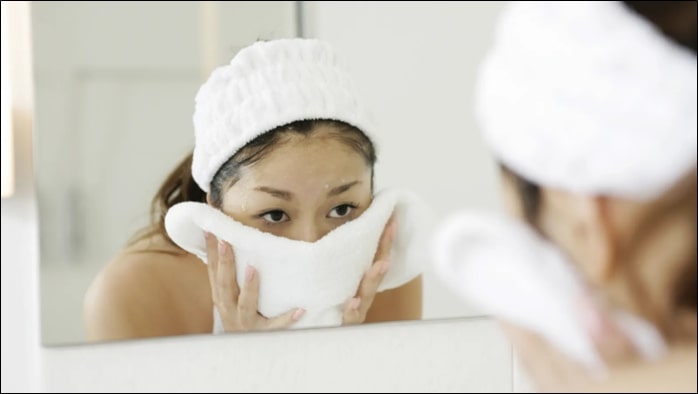
Does the material actually make a difference?
Yes, but not in the way most guides describe it. Cotton and bamboo are both good choices — the question is what type of cotton, and what the fabric does to your skin.
Standard cotton face cloths vary enormously depending on how the yarn was spun. Open-end spun cotton — the most common production method — creates a coarser yarn with loose fibre ends. Those ends feel fine on day one. After ten or fifteen washes, they break away from the pile and the cloth feels rougher against your skin. That roughness isn't your imagination — it's the fibre degrading. We've covered exactly why this happens — and how to spot it before you buy — in this guide.
Ring-spun cotton is spun under tension, which twists the fibres tighter together. The pile stays denser, the texture stays consistent, and the cloth keeps its softness through repeated washing. If you're looking for good quality face cloths made from the right fabric for daily facial use, yarn construction is the deciding factor — not just the GSM number on the label.
If you've ever had a face cloth that stayed reliably soft for months rather than weeks, it was almost certainly ring-spun. Our 500 GSM Royal Egyptian face cloths and 400 GSM institutional range both use ring-spun cotton — it's not a premium-only construction, it's a manufacturing decision that changes how long the cloth performs.
Bamboo behaves differently to cotton at fibre level. The fibres are naturally smooth and round in cross-section, which means there are no rough ends to irritate skin — even before washing. Bamboo is also naturally antibacterial, which matters for a cloth that sits damp between uses. Our 700 GSM bamboo face cloths are GOTS certified — meaning certified organic fibres and responsible manufacturing, verified by an independent body rather than just claimed on a label.
Best face cloth for sensitive or reactive skin

For the softest face cloths for sensitive skin, bamboo is the right starting point — but construction matters more than material here.
Sensitive skin reacts to friction and to bacteria. A bamboo cloth addresses both — the smooth fibre causes less mechanical irritation, and the natural antibacterial properties mean the cloth stays cleaner between uses. Our 700 GSM bamboo collection is the right choice if your skin reacts easily, particularly if you have eczema-prone or acne-prone skin where bacterial transfer from a damp cloth is a real concern. They work equally well as facial cloths for daily skincare routines where consistent gentleness matters.
If you prefer cotton, go ring-spun and go dense. If you're still deciding between the two materials, our cotton vs bamboo comparison breaks down which lasts longer and which feels softer in real use. The 600 GSM Royal Egyptian double yarn uses two yarns twisted together — the pile is tighter and softer than a standard 600 GSM, and there's less surface roughness even on the first use. The 100% organic cotton gift set is also worth considering — GOTS certified, free from synthetic treatments, and genuinely one of the softest face cloths for skin that reacts to chemical finishes.
What to avoid: any face cloth described as "cotton rich" or "cotton blend" without specifying ring-spun construction. These almost always use open-end spun yarn, which sheds faster and feels rougher over time.
Best face cloth for exfoliation
This is where texture and weave type matter most.
Used as a face exfoliator cloth, terrycloth works through the pile moving across skin — providing mild mechanical exfoliation through contact rather than through added abrasive materials. It removes dead surface cells without stripping the skin barrier. A terrycloth face cloth — which is what most cotton and bamboo cloths are — provides this gentle exfoliating action when you move it in small circles across the skin.
The 550 GSM zero twist face cloth has a notably soft, open pile that makes it effective for this — available here in the UK with free delivery over £35. Zero twist construction means the yarn loops aren't tightened at the weave stage, so the pile lies flatter and moves across skin more gently — good for daily use where you want mild exfoliation without redness.
A muslin face cloth is the alternative for exfoliation — finer weave, more friction per stroke. We don't stock muslin, but if exfoliation is your primary goal rather than drying and cleansing, it's worth knowing the difference: muslin cloths work through abrasion, terrycloth works through absorption and surface contact. Most people with normal or dry skin do better with terrycloth used regularly than muslin used occasionally.
Best face cloth for removing makeup
Weight and pile depth matter here more than material type.
You need enough pile to physically lift makeup from the skin surface without needing to press hard. A 500 GSM cloth is the practical minimum for effective makeup removal — lighter cloths skip across the surface rather than absorbing. Our 500 GSM Royal Egyptian face cloths are consistently used for this — the ring-spun pile grips and removes without requiring product underneath, though they work well with cleansing balms too.
For stubborn or waterproof makeup, the 600 GSM zero twist soft touch has a particularly open pile that absorbs product efficiently. Use it damp with warm water rather than dry — the warmth loosens the makeup and the pile absorbs it in one pass without pulling at the skin.
Best face cloth for daily use — balancing softness and drying time
The honest answer for the best face towel for daily home use: 500 GSM ring-spun.
The 700 GSM cloths are thicker and denser, but they take longer to dry between uses — which matters if you're using the same cloth morning and evening. At 500 GSM you get enough pile for absorbency and softness, with drying time that's practical for daily rotation. As best face towels go, this weight suits the majority of everyday routines without compromise.
If you're buying multiples and rotating, the weight matters less because the cloth has time to dry fully. In that case the 700 GSM Royal Egyptian makes more sense — the double yarn construction means it holds its softness significantly longer than a standard 700 GSM, and you're replacing less often.
How often should you replace a face cloth?
More often than most people do, less often than most beauty guides claim.
A well-made ring-spun cotton face cloth washed at 40–60°C every two to three uses will hold its performance for three to four months of daily use before the pile starts to thin noticeably. Cheaper open-end spun cloths degrade faster — sometimes within six weeks of regular washing at higher temperatures.
The signs to watch for: texture becomes noticeably rougher, the cloth stops absorbing as quickly as it did, or the pile is visibly thinning. All three are yarn degradation signals, not just age. If your cloth feels rough after a month, the yarn construction — not the frequency of washing — is almost certainly the problem.
Washing tips that actually extend cloth life: no fabric softener (it coats the fibres and reduces absorbency over time), wash at 40°C for cotton and 30°C for bamboo, don't tumble dry on high heat repeatedly. These aren't marketing cautions — they're the reason commercial laundries use specific detergent formulations and temperature controls to extend textile life.
GSM quick reference for face cloths
400 GSM: Fast-drying, ring-spun carded cotton, institutional grade. The choice for hotels, gyms, and care homes running commercial laundry cycles. Performs consistently at 60°C and above. If you're sourcing for a hotel or commercial property, our full hospitality buying guide covers GSM, wash cycles, and bulk ordering.
450 GSM: UK leisure standard weight. Practical for facilities that need a balance between cost-per-unit and durability.
500 GSM: The most versatile weight for home and mid-range hospitality. Enough pile for effective makeup removal and cleansing, dries within hours. The best face towel weight for most daily routines.
550 GSM zero twist: Open pile, softer initial feel, good for gentle daily exfoliation and sensitive skin routines.
600 GSM: Noticeably thicker, holds warmth, better for spa-style cleansing routines. Double yarn construction at this weight outlasts standard single-yarn alternatives significantly.
700 GSM: Maximum weight and density. Double yarn or bamboo construction. The longest-lasting option when washed correctly and among the softest face cloths in the range.
FAQs
What is the difference between a face cloth, face flannel, and wash cloth?
Nothing, in practice — the best face flannel and the best face cloth are exactly the same product, just two names for it. Whether you call it a face cloth, flannel, or washcloth, you're describing the same small square cloth, typically 30×30 cm, used for washing and drying the face. "Face flannel" is traditional British English, particularly common in northern England. "Face cloth" is the standard retail term online. "Washcloth" is more common in American English but used widely in the UK too.
Is cotton or bamboo better for your face?
It depends what your skin needs. Bamboo is smoother at fibre level and naturally antibacterial — better for sensitive, reactive, or acne-prone skin. Ring-spun cotton is more durable across higher wash temperatures and offers more variety in GSM weight. Both are good choices when the construction is right. The mistake is assuming any cotton cloth is equal to any other — yarn construction and GSM together determine how the cloth performs and how long it lasts.
Can I use a face cloth every day?
Yes, and you should — whether you call it a face cloth, flannel, or washcloth, daily use is fine as long as you're rotating. Wash it every two to three uses. A damp face cloth left between uses accumulates bacteria quickly. If you're using it daily, rotate between two or three cloths so each one dries fully before the next use.
What GSM is best for a face cloth?
For daily home use: 500 GSM. For sensitive skin wanting maximum softness: 600–700 GSM double yarn or bamboo. For commercial or high-frequency use: 400–450 GSM ring-spun institutional. The weight you need depends on whether you're prioritising softness, drying time, or durability through repeated commercial washing.
Why does my face cloth go rough so quickly?
Almost always yarn construction. Open-end spun cotton — used in most budget face cloths — sheds fibre ends with every wash. After ten to fifteen cycles, the pile thins and the surface feels coarser. Ring-spun cotton holds the fibres under tension before weaving, so the pile degrades much more slowly. Washing above 60°C regularly, using fabric softener, and tumble drying on high heat all accelerate the deterioration — but if the cloth went rough within a month, the yarn was the issue from the start.