



How to Choose a Bathrobe or Dressing Gown – Buying Guide
Posted by Talha Nisar on 19th Apr 2026
Choosing a bathrobe sounds straightforward until you're faced with a dozen options and have no idea whether you need 400 GSM or 600 GSM, cotton terry or waffle, hooded or shawl collar. This guide covers everything that actually matters — material, weight, style, fit, and the right choice for your specific situation — whether you're buying for home, a hotel, or as a gift.
Bathrobe or Dressing Gown — Is There a Difference?
In the UK, the two terms mean the same thing. Dressing gown is the traditional British word; bathrobe is more commonly used in hospitality and spa contexts, and has become widely used here too. Both describe the same garment — a wrap-around robe worn after bathing, around the home, or in commercial settings like hotels and spas.
Throughout this guide, we'll use both terms interchangeably, as most UK buyers do.
The Four Things That Actually Determine Which Robe You Need
Before getting into specific options, it helps to understand the four variables that drive every buying decision:
- Material — determines absorbency, feel, drying time and durability. The most important choice you'll make.
- GSM (weight) — determines how thick, heavy and warm the robe feels. Higher GSM = heavier and more plush; lower GSM = lighter and faster drying.
- Style — hooded, shawl collar, or kimono. Each suits a different use case.
- Use case — home use, hotel or hospitality, spa, gifting. The right robe for a five-star hotel is not necessarily the right robe for daily home use.
Get these four right and the choice becomes simple.
Bathrobe Materials Explained
Material is the single most important factor. Here's an honest breakdown of what's available and what each one is actually suited for.
Cotton Terry (Towelling)
The most common and most practical material. Cotton terry has a looped pile construction — those small loops on both sides of the fabric are what give it its absorbency. The loops pull moisture away from the skin quickly, which is why this is the material used in most UK homes and the majority of hotels worldwide.
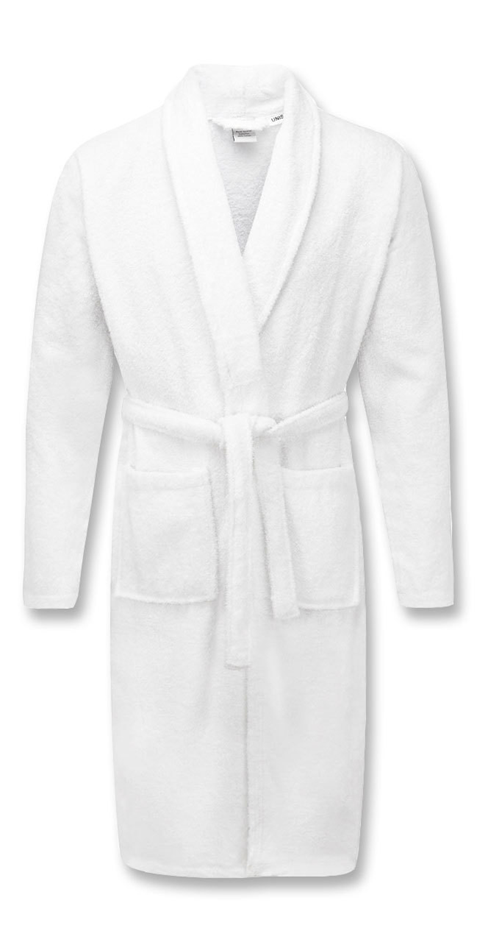
Cotton terry robes are heavier when wet, take slightly longer to dry on a rail than thinner fabrics, but they hold their shape and quality through hundreds of washes. They soften noticeably after the first few washes and continue to improve with use.
Best for: Post-shower use, everyday home comfort, hotels, care homes, anyone who prioritises absorbency.
Drawback: Heavier than waffle or kimono options — not ideal if you want something lightweight.
Waffle Weave Cotton
Waffle robes have a distinctive textured, honeycomb-pattern surface. They're made from cotton but woven differently — the raised grid pattern creates more surface area, which gives reasonable absorbency while allowing much better airflow than terry. The result is a robe that's noticeably lighter, dries faster on the rail, and feels less heavy when worn.
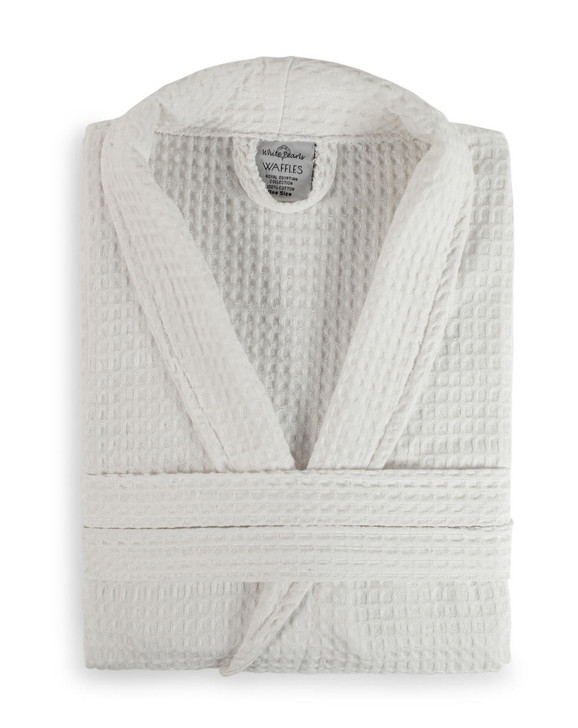
Waffle is the go-to material for spas and beauty salons, partly for its modern aesthetic and partly because it handles frequent laundering well without becoming heavy or slow to dry. It also packs and folds more neatly than terry, which matters for linen storage in commercial settings.
Best for: Spas, salons, Airbnb, holiday lets, warmer months, anyone who finds cotton terry too heavy.
Drawback: Less absorbent than terry. If your main use case is drying off after a shower, terry is more practical.
Velour
Velour robes have a cotton towelling interior combined with a smooth, velvety outer surface. The inside absorbs like a standard cotton robe; the outside has a soft, almost silky feel that looks noticeably more premium than plain towelling.
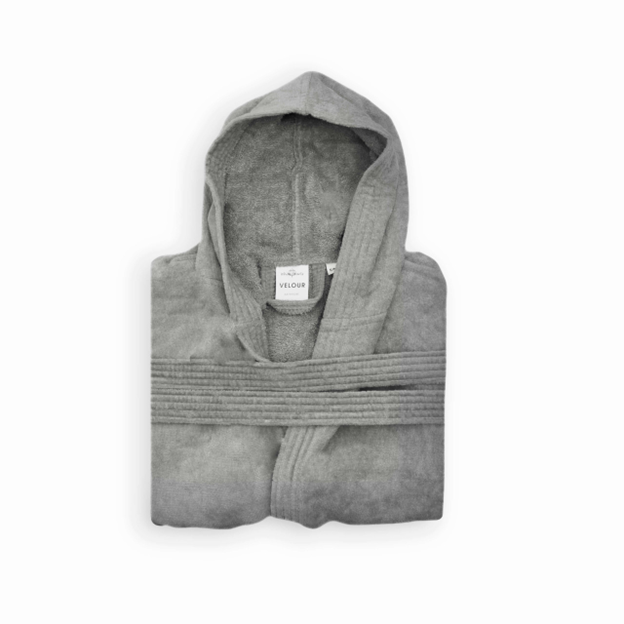
Velour robes are warm, sleek and present well — they're the most popular choice for gifting, bridal suites, and luxury accommodation. They're not the most practical choice for everyday shower use, as the velvet outer surface takes slightly longer to dry than plain terry, but for comfort and appearance they're hard to beat.
Best for: Gifting, luxury accommodation, winter lounging, anyone who wants a robe that looks and feels premium.
Drawback: Slower drying than terry or waffle. Not ideal for high-turnover commercial use.
Turkish Cotton
Turkish cotton is a long-staple cotton variety — the fibres are longer and finer than standard cotton, which produces a fabric that's softer, smoother and silkier to the touch. Turkish cotton robes are lighter than standard cotton terry at the same GSM, and they dry faster because the longer fibres absorb and release moisture more efficiently.
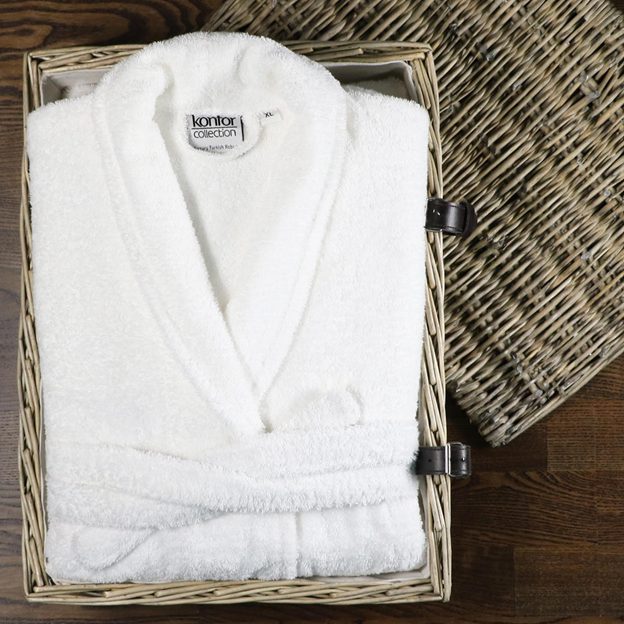
They have a more elegant drape than standard terry robes, which is why they're popular in boutique hotels and upmarket spa settings where appearance matters as much as function.
Best for: Boutique hotels, upscale hospitality, buyers who want the feel of a spa robe at home.
Drawback: More expensive than standard cotton. The smoother surface feels less "fluffy" than thick terry if that's what you're used to.
2-in-1 Waffle & Towelling
A less common but genuinely useful construction — waffle weave on the outside, cotton towelling on the inside. You get the lightweight, modern look of a waffle robe on the exterior with the absorbency of cotton terry against the skin. These are particularly popular as a crossover option where you want something that looks contemporary but still works properly as a post-shower robe.
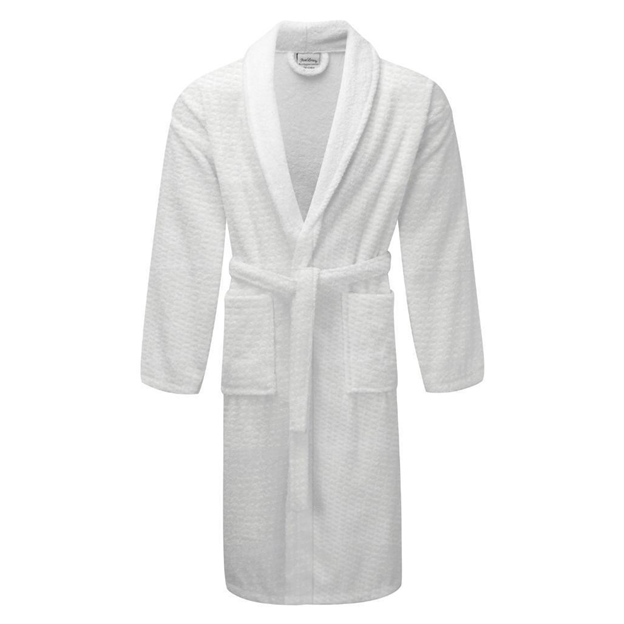
Best for: Modern homes, boutique hospitality, buyers who want the look of waffle with the practicality of terry.
Material Comparison at a Glance
|
Material |
Absorbency |
Weight |
Drying speed |
Best for |
|
Cotton terry |
Excellent |
Medium–heavy |
Moderate |
Home, hotels, everyday use |
|
Waffle cotton |
Good |
Light |
Fast |
Spas, salons, Airbnb |
|
Velour |
Good |
Medium |
Moderate |
Gifting, luxury, winter |
|
Turkish cotton |
Very good |
Light–medium |
Fast |
Boutique hotels, premium home |
|
2-in-1 waffle/terry |
Very good |
Light–medium |
Moderate |
Modern homes, hospitality |
What Does GSM Mean for Bathrobes?
GSM stands for grams per square metre — it measures how much the fabric weighs per unit of area. For robes and towels, it's shorthand for how thick, heavy and dense the fabric is.
Higher GSM means a heavier, denser, more plush robe. Lower GSM means a lighter, thinner, faster-drying one. Neither is objectively better — the right GSM depends on what you're using the robe for.
300–350 GSM
Lightweight robes at this range are the thinnest and fastest drying option. They're rarely used for standard cotton terry robes in the UK but are common in waffle and kimono styles. At this weight the robe is more of a cover-up than a warmth provider — suitable for warm climates, summer use, or spa settings where robes are changed between clients.
400–450 GSM
The practical mid-range. Absorbent enough for post-shower use, light enough to dry reasonably quickly, and comfortable for everyday wear around the house. This is the most commonly stocked weight for budget hospitality — holiday lets, hostels, student accommodation — because it balances cost, durability and ease of laundering.
500–550 GSM
The hotel standard. At this weight a cotton terry robe has the plush, substantial feel that most people associate with a proper hotel bathrobe. It's heavy enough to feel genuinely warm, absorbent enough to work properly after a bath or shower, and durable enough to withstand commercial laundering over time. This is the range we'd recommend for most home buyers who want a quality robe, and it's what the majority of UK hotels stock.
600 GSM and above
At 600 GSM and higher you're into premium and luxury territory — robes that feel noticeably heavy, exceptionally soft, and very warm. These are a strong choice for gifting where the unboxing feel matters, or for buyers who want the most indulgent home robe they can find. They take longer to dry and are heavier to handle, which is why they're less common in commercial settings.
GSM by Use Case
|
Use case |
Recommended GSM |
|
Spa or salon (high turnover) |
300–400 GSM |
|
Holiday let / Airbnb |
400–450 GSM |
|
Budget hotel / hostel |
400–500 GSM |
|
Standard hotel room |
500–550 GSM |
|
Home everyday use |
450–550 GSM |
|
Gifting / luxury |
550–600 GSM+ |
Dressing Gown Styles — Hooded, Shawl Collar and Kimono
Once you've settled on a material and GSM, the style determines the look and fit. There are three main collar styles, each with distinct characteristics.
Hooded Dressing Gowns
A hooded dressing gown has a built-in hood attached at the back of the collar. The practical advantage is that the hood can be used to wrap around wet hair after a shower or bath — it acts as a soft hair towel and helps retain warmth around the head and neck that a standard collar doesn't provide.
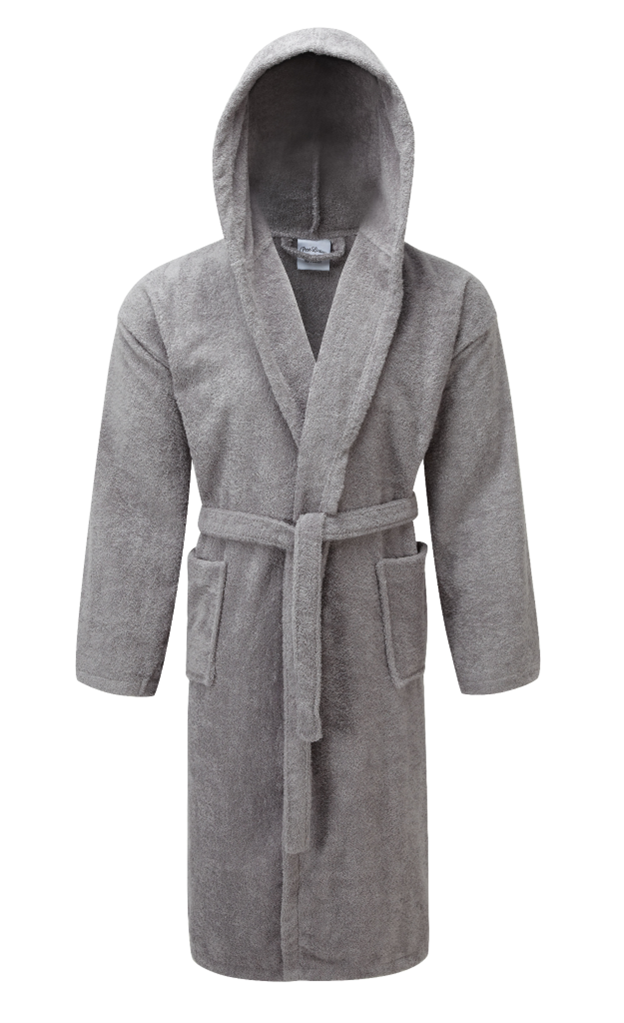
Hooded robes are popular with swimmers, people with longer hair, and anyone who finds cold mornings particularly uncomfortable. They're also commonly bought for children. Our hooded dressing gowns are made from 100% cotton towelling and are available in a range of colours including white, charcoal, navy and silver grey.
The hood does add some bulk, so if you prefer a cleaner, less casual look, a shawl collar may suit better.
Best for: Post-shower hair drying, cold mornings, swimming, buyers who want maximum coverage and warmth.
Shawl Collar Dressing Gowns
The shawl collar is the classic hotel-style robe — a wide, folded collar that wraps around the front of the chest and lies flat against the shoulders. It's the most recognisable bathrobe silhouette, and for good reason: the shawl collar frames the face well, stays in place naturally, and gives a clean, smart appearance.
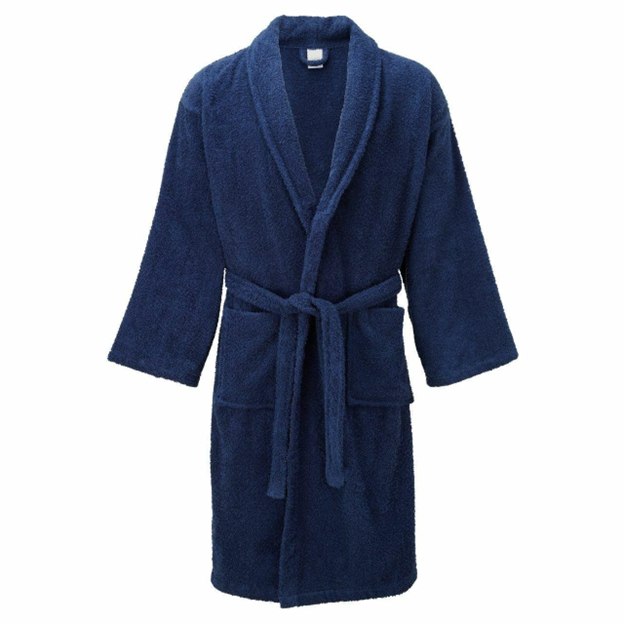
Shawl collar robes look more polished than hooded options, which is why they dominate in hotels, spas and luxury gifting. They sit well on both men and women and suit virtually any body type. Our shawl collar dressing gowns are made from cotton terry and are available in multiple weights.
Best for: Hotels, gifting, buyers who want a classic look, home use where appearance matters.
Kimono Style Robes
The kimono robe has a flat, open collar with no hood and minimal structure — it's the lightest and most minimal of the three styles. The wrap-around front is held in place by a tie belt at the waist. Kimono robes are lighter and less voluminous than hooded or shawl collar options, which makes them a practical choice for spas, salons and warm-climate use where the bulk of a full towelling robe isn't desirable.
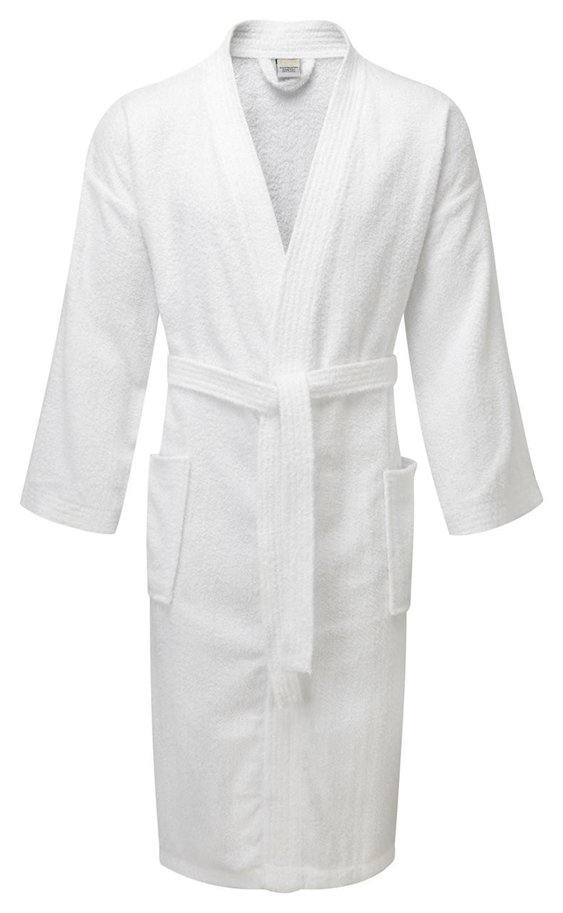
Our kimono robes sit at the value end of our range and are a popular choice for businesses that need affordable, practical robes in quantity — beauty salons, Airbnbs, holiday parks, and similar.
Best for: Spas, salons, lightweight use, value-conscious bulk buyers, warm climates.
Style Comparison
|
Style |
Hood |
Weight feel |
Best setting |
Look |
|
Hooded |
Yes |
Medium–heavy |
Home, swimming, cold use |
Casual, cosy |
|
Shawl collar |
No |
Medium–heavy |
Hotels, gifting, home |
Classic, polished |
|
Kimono |
No |
Light |
Spas, salons, Airbnb |
Minimal, modern |
Men's and Women's Dressing Gowns — What's the Difference?
Most robes sold in the UK, including ours, are designed as unisex — they come with an adjustable tie belt, a relaxed fit, and a standard length that works for both men and women across a range of heights.
That said, there are some practical differences worth knowing:
Men's robes tend to run longer in length, with wider shoulders and a more generous chest and waist measurement. Women's options sometimes come in shorter lengths and are cut slightly narrower at the shoulders, though many women prefer the more relaxed fit of a standard unisex robe.
The safest approach when buying is to check the size guide on the individual product rather than assuming a size based on clothing. Dressing gown sizing tends to be generous — if you're between sizes, going up a size usually works better than going down for comfort.
For gifting, a unisex medium or large covers the majority of adult body types without needing to know the recipient's exact measurements.
Choosing a Robe for Specific Settings
For Home Use
For everyday home use, a 450–550 GSM cotton terry robe in a shawl collar or hooded style covers most bases. If you like a heavy, warm robe in winter, go towards 550 GSM. If you want something you can wear year-round without overheating, 450–500 GSM is the better call. White and light grey are the most popular colours for home use as they wash consistently and don't show fading.
For Hotels and Guest Accommodation
Hotels prioritise three things: durability, laundering efficiency, and guest experience. A 500 GSM cotton terry shawl collar robe in white hits all three — it's heavy enough to feel luxurious to guests, white enough to launder at standard temperatures, and durable enough to withstand repeated commercial washing cycles. Waffle robes at 350–400 GSM are a strong alternative if you're managing laundry volume and drying time closely.
For Spas and Salons
In a spa or salon, robes are changed between clients and washed multiple times per day. At that turnover rate, weight and drying time matter more than plushness. Waffle robes at 300–400 GSM or kimono-style robes are the most practical choice — they dry faster, store more compactly, and still look smart.
For Airbnb and Holiday Lets
For short-term rental properties, the robe needs to look good in photos, feel premium to guests, and wash reliably at 40°C. A 450–500 GSM cotton terry or waffle robe in white or light grey is the standard choice. If you're buying for multiple properties, our packs and box quantities bring the per-unit cost down significantly, with no minimum order required.
For Care Homes
Care homes need robes that are practical above all else — easy to launder, durable at volume, light enough for residents to wear comfortably, and without fussy features. A 400–450 GSM unisex cotton terry robe in a standard shawl collar style is usually the right choice. White or light colours make it easier to identify cleanliness visually between washes.
For Gifting
For gifting, go heavier and go velour or Turkish cotton if the budget allows. A 550–600 GSM robe feels noticeably more premium when unwrapped, and the feel of velour's soft outer surface makes an immediate impression. White, ivory, and silver grey are safe colour choices for gifts when you don't know the recipient's preferences. Our Egyptian Collection hooded and shawl collar robes in white at 500+ GSM are consistently our most gifted products.
A Quick Buying Checklist
Before you add to basket, work through these:
What will you mainly use it for? Post-shower absorbency → cotton terry. Lounging → any material. Gifting → velour or Turkish cotton.
How heavy do you want it? Everyday practical use → 450–500 GSM. Maximum warmth and luxury → 550–600 GSM. High-turnover commercial → 350–450 GSM.
Do you want a hood? Yes → hooded style. No → shawl collar or kimono.
Is this for commercial use? If yes — consider pack quantities, white colourway for laundering, and GSM in the 400–500 range for drying practicality.
What size? Check the individual product size guide. When in doubt, go up a size.
FAQs
What's the best material for a dressing gown?
For most people, 100% cotton terry is the most practical — it's absorbent, durable and improves with washing. For gifting or luxury use, velour or Turkish cotton feel more premium. For spas and salons, waffle is the better choice.
What's the difference between a bathrobe and a dressing gown?
In the UK they mean the same thing. Dressing gown is the traditional British term; bathrobe is more common in hospitality and has crossed into everyday use. Both refer to the same garment.
What GSM should I look for in a dressing gown?
For home everyday use, 450–550 GSM is the sweet spot. For commercial and hospitality use, 400–500 GSM is more practical. For gifts or premium use, 550 GSM and above.
Are dressing gowns unisex?
Most are. Our robes have adjustable belts and a relaxed fit that works for men and women. Check the individual size guide — for gifting, a unisex medium or large fits most adults.
Can I buy dressing gowns in bulk?
Yes — we supply bathrobes wholesale to hotels, spas, care homes, Airbnb hosts and salons across the UK. There's no minimum order, so you can order what you need. For larger quantities, trade pricing is available.You can visit our wholesale bathrobe page.
Do cotton robes shrink?
Minor shrinkage on the first wash is normal for 100% cotton. Washing at 40°C and tumble drying on low minimises this. The robe stabilises in size after the first couple of washes and continues to soften.
Ready to Shop?
Browse our full range of bathrobes and dressing gowns — cotton towelling, waffle, velour and Turkish cotton styles for home, hotel and commercial use. No minimum order, fast UK delivery from our Bolton warehouse.
If you know which style you want, jump straight to:
- Hooded Dressing Gowns — cotton terry, multiple colours, S–XXL
- Shawl Collar Dressing Gowns — the classic hotel-style robe
- Kimono Robes — lightweight, practical, value-priced